
How the Aussie Dollar fared against the Japanese yen in FY2026, and where the banks see the AUD to JPY exchange rate heading in FY2027.
Japan has never been more tempting for Aussie travellers — and a big part of that is the exchange rate. The yen has spent the past couple of years near multi-decade lows, which means your Aussie Dollars have been stretching further in Tokyo, Kyoto and Osaka than they have in a generation. Ramen, shinkansen tickets, konbini snacks, a night in a ryokan: all of it has felt like a bargain.
One quirk to get your head around first: unlike the US Dollar or the euro, the AUD to JPY exchange rate is a number above one — currently around ¥112 to the Aussie Dollar. So instead of a decimal, you're counting how many yen you get per dollar. (Flip it around and one yen is worth a bit under one Australian cent, which is why prices in Japan look enormous — a ¥1,000 bowl of ramen is only about A$9.)
To put it in real money: change A$2,000 at today's ~¥112 and you'll bank about ¥224,000 — enough for a serious amount of ramen, train travel and konbini runs. That's close to the best buying power Aussie travellers have had in years, which is exactly why Japan feels like such great value right now.
So let's look at where the Aussie went against the yen in FY2026, and what the banks are forecasting for FY2027.
First, a quick FY refresher…
When we say FY 2026, we mean the Australian financial year that runs 1 July 2025 to 30 June 2026. FY 2027 is 1 July 2026 to 30 June 2027. So put the calendar year aside just for a moment.
How did the AUD to USD rate perform in FY2026?
TL;DR: A cracking year for the Aussie against the yen. AUD/JPY climbed roughly 18% and finished near multi-decade highs — great news if you were heading to Japan.
Where it started (July 2025): The Aussie opened the financial year around ¥95.
The low (mid-2025): That was close to the year's floor of about ¥94 — the weakest point before a long climb.
The climb (late 2025 – mid 2026): From there it rose steadily, reaching about ¥104 by December 2025 and pushing on to a peak near ¥115 around the middle of 2026.
Where it landed (June 2026): It eased back slightly to around ¥112 by the end of June 2026.
The FY2026 scorecard: From roughly ¥95 to around ¥112 — up about 18% across the year. The story was really about the yen, not the Aussie. Japan's central bank kept interest rates extraordinarily low (just 0.75% by the end of 2025, versus 4.35% here), so global investors kept borrowing cheap yen to buy higher-yielding currencies like the Aussie — the classic "carry trade." A weak yen plus a firm Aussie sent the rate to levels Australian travellers hadn't seen in years, with the yen sitting near a four-decade low against the US Dollar.
What is the AUD to USD forecast for FY2027?
Here's the key thing to understand: AUD/JPY is really two stories rolled into one — what the Aussie does against the US Dollar, and what the US Dollar does against the yen. Most of the action lately has been on the yen side, so that's where the forecasts focus.
The short version: the Aussie is sitting near multi-decade highs against the yen, and forecasters broadly expect it to stay in historically strong territory through FY2027. Some see it holding around current levels, and J.P. Morgan expects it to push higher; others see it easing back a little as Japan's central bank slowly raises rates — but even those views keep the Aussie well above where it was a year ago. Here's how the major institutions frame it:
| Bank/Institution | View on the yen | Implied AUD to JPY, FY2027* |
| J.P. Morgan | Expects the yen to stay weak | Stays elevated, ~¥113–118 |
| ING | Sees the yen recovering some ground as the Bank of Japan hikes | Eases toward ~¥107–110 |
| Scotiabank | Looks for a firmer yen | A little lower, ~¥105–108 |
| MUFG | Gradual yen recovery as the Bank of Japan normalises | Modestly lower over time |
| Westpac | Yen slowly strengthening as the Bank of Japan raises rates | Eases toward ~¥108–110 by mid-2027 |
| NAB | Bank of Japan keeps hiking (toward 1.25%), firming the yen, while the Aussie stays well supported | Broadly steady, easing slightly |
How we get there: Australia's own banks, Westpac and NAB, publish AUD/JPY in their forecast tables, and the ranges here follow from their published views — that the yen will slowly strengthen as the Bank of Japan raises rates, while the Aussie stays well supported. The global banks (J.P. Morgan, ING, Scotiabank, MUFG) publish a yen-vs-US-dollar forecast rather than a direct Aussie-to-yen figure, so those ranges combine each bank's yen view with an Australian Dollar sitting around US$0.70–0.72.
What this means in plain English
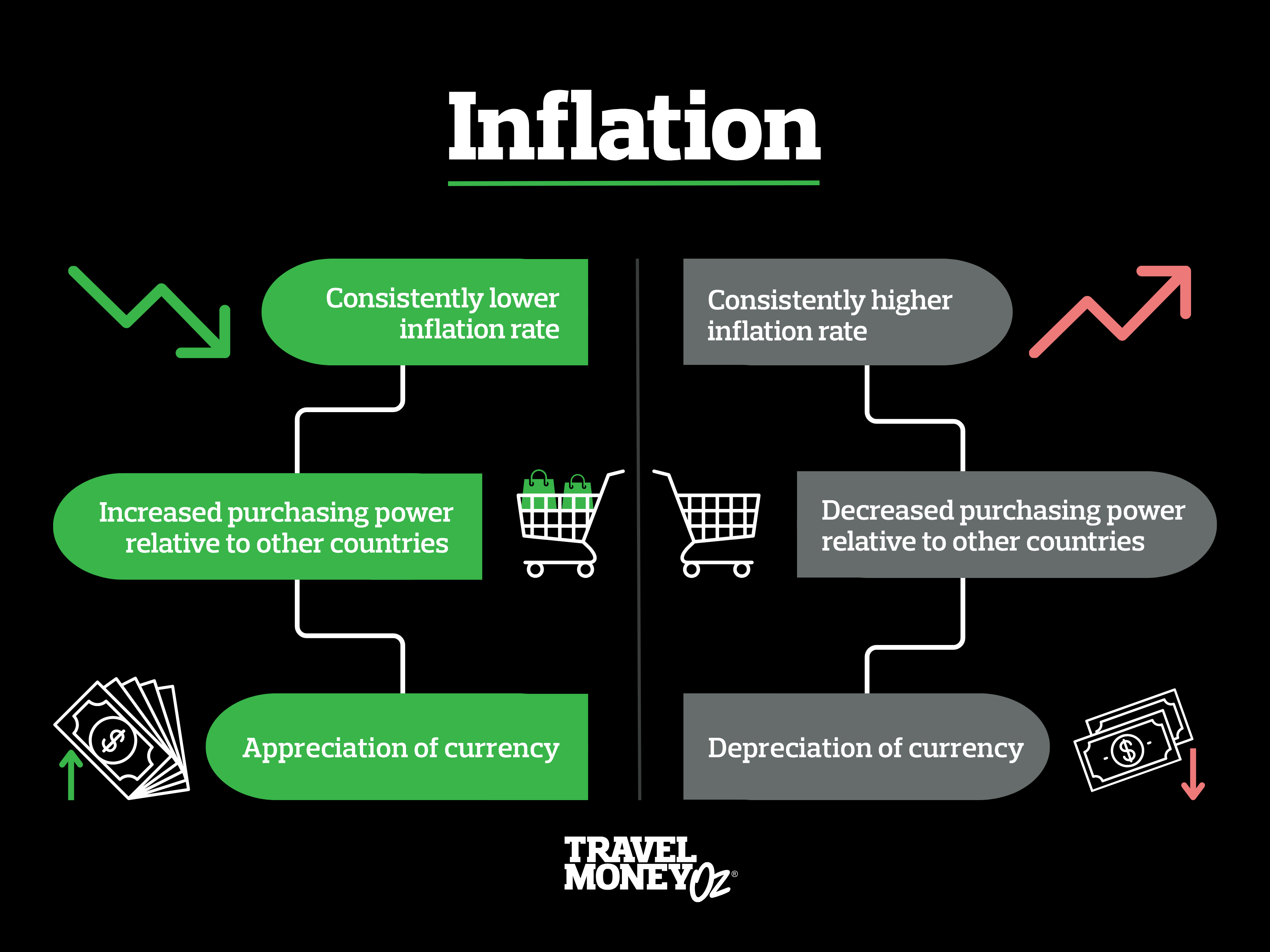
The Aussie's strength against the yen has been built on one thing above all: the enormous gap between Australian interest rates (4.35%) and Japanese ones (around 0.75–1%). That gap makes holding Aussie Dollars far more rewarding than holding yen, which has kept AUD/JPY high.
For FY2027, most forecasters expect that gap to narrow a little — not because Australia cuts, but because Japan's central bank keeps slowly raising rates. Either way, the Aussie is expected to stay strong against the yen by the standards of recent years, and J.P. Morgan is the most upbeat, expecting the yen to stay weak and AUD/JPY to hold up or climb.
Like any exchange rate, AUD/JPY will move around — the yen is a safe-haven currency, so it can firm up when global markets get nervous. But the headline for travellers is a happy one: right now you're looking at some of the best yen buying power in years, and the forecasts suggest it should stay in that strong ballpark.
So, what's it worth to you?
Let's run AUD$2,000 through the range so you can see it in holiday terms.
The honest takeaway: the Aussie is near its best level against the yen in years, so today's rate is a genuinely good one to be working with. Even the more cautious forecasts keep it in historically strong territory — so rather than waiting and hoping for a bit more, most travellers will do well to make the most of the great rate that's on offer right now.
| If the rate is… | A$2,000 gets you… | Difference vs ¥112 |
| ¥105 (if the yen recovers) | ¥210,000 | ¥14,000 less |
| ¥108 (middle-of-the-road) | ¥216,000 | ¥8,000 less |
| ¥112 (around today) | ¥224,000 | — |
| ¥115 (if the yen stays weak) | ¥230,000 | ¥6,000 more |
A quick heads-up: these conversions use the mid-market rate — the midpoint rate quoted by banks and data providers. It's not the retail rate you'll actually get when you buy your travel money, which includes a margin. Treat these figures as a guide to how the market moves, not an exact quote.
How do the banks come up with these numbers?
Banks crunch a mountain of data, and no method is bulletproof. For AUD/JPY, a few forces matter most.
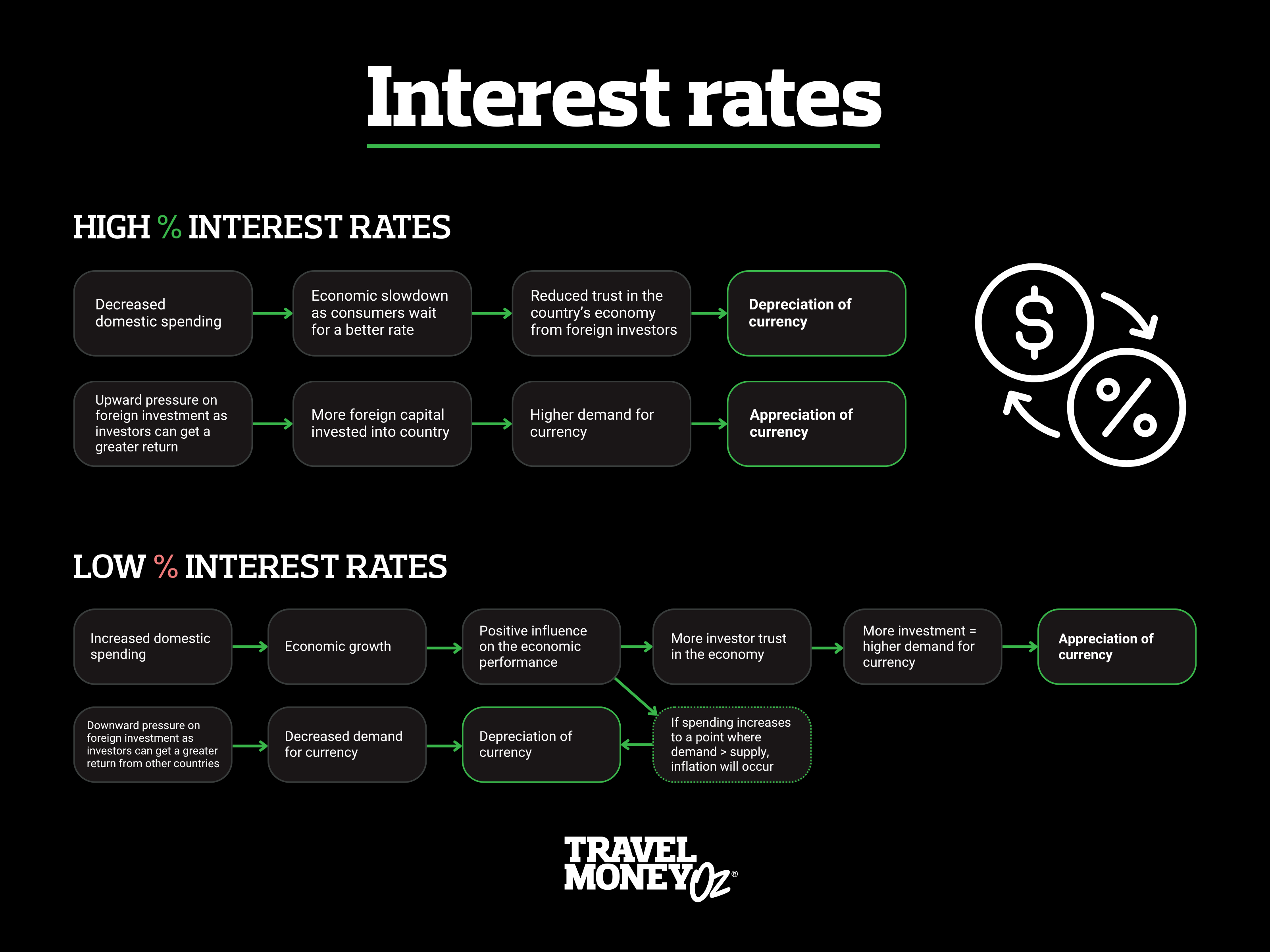
The interest-rate gap: This is the big one. High Australian rates versus rock-bottom Japanese rates make the Aussie attractive to hold and fund the "carry trade." As Japan's central bank slowly lifts rates, that gap narrows and some of the Aussie's advantage fades.
The US Dollar and the yen: Much of AUD/JPY's movement actually comes through the US Dollar, since the most-traded yen pair is USD/JPY. When the greenback is strong against the yen (as through 2026), it tends to drag AUD/JPY up too.
Risk sentiment: The yen is a classic safe haven, and the Aussie is a classic "risk-on" currency. When markets are calm and confident, money flows into the Aussie and AUD/JPY rises. When fear strikes, investors rush to the yen and the pair can fall sharply — fast.
Commodity prices: Australia's export earnings (iron ore, coal, gas, gold) support the Aussie when global demand — especially from China — is strong. Japan, by contrast, imports almost all its energy, so high oil prices tend to weaken the yen further.
A few definitions to sound clever at trivia
Appreciation: when the Aussie gains value. AUD/JPY going from ¥108 to ¥112 means it has appreciated — more yen per dollar.
Depreciation: when the Aussie loses value. ¥112 back to ¥108. Fewer yen for your trip.
Carry trade: borrowing a low-interest currency (the yen) to buy a higher-interest one (the Aussie) and pocketing the difference. It's a huge driver of AUD/JPY, and a big reason the Aussie has been so strong against the yen.
The golden rule: a currency's value is really just supply and demand.
- More trust = more people willing to invest in country = greater demand for currency = appreciation
- Less trust = less foreign capital invested into country = decreased demand for currency = depreciation
The traveller's takeaway
From where we sit in mid-2026, the big banks lean optimistic on the From where we sit in mid-2026, the Aussie is near multi-decade highs against the yen, and forecasters broadly expect it to stay in historically strong territory through FY2027 — mostly in the ¥105–115 range, with J.P. Morgan the notable optimist tipping the yen to stay weak and AUD/JPY to hold up or climb.
What does that mean for your trip? In short: it's a great time to be heading to Japan. The rate you can get today is one of the best in years, and even the more cautious forecasts keep your yen buying power strong. That makes locking in your yen now a smart, low-stress move — you get to enjoy a cracking rate and tick something off the pre-trip list, rather than watching the market and second-guessing yourself.
The smart move isn't to gamble on the perfect day. It's to watch the rate, buy in a couple of chunks rather than all at once, and lock in a rate you're happy with when you see it. Set up a currency rate alert and let the watching happen for you, and ask in store about our Rate Move Protection so you're covered if the rate moves in your favour shortly after you buy.
Now go forth and budget those bowls of ramen.
Disclaimer:
*This blog is provided for information only and does not take into consideration your objectives, financial situation or needs. The forecasts referenced here are based on publicly available information published by major banks and financial institutions, and are predictions made by those third parties — they are subject to change and are not guarantees of future performance. All exchange rates, forecasts and conversion examples in this article refer to the mid-market rate (the midpoint between the buy and sell prices, as quoted by banks and financial data providers). This is not the retail rate you receive when you exchange currency. Like all currency providers, Travel Money Oz exchanges at retail rates, which include a margin, so the actual amount of Japanese Yen you receive for your Australian Dollars will differ from the mid-market figures shown here. You should consider whether the information and suggestions here are appropriate for you. Rates may vary across providers and over time. Figures and "what it buys you" examples are approximations and should be used as a guide only.
* Terms and conditions apply to Rate Move Protection; you can find them here.
FAQ
Will the Australian Dollar get stronger against the Vietnamese Dong in 2027?
What was the highest AUD to VND rate in FY2026?
When is the best time to buy Yen?
Why has the Japanese Yen been so weak?
Tags
About the Author
.png?h=1080&iar=0&w=1920&t=m16x9)
Amber Dorman
More like this
